


VSTS-615-100-265-300N-2 (1A6A)
VST

Specifications
-
 mounts A6 A
 -
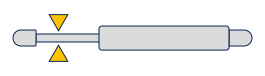 Rod Ø 6 mm
 -
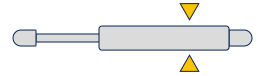 Cylinder Ø 15 mm
 -
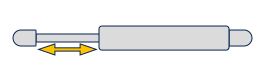 Rod stroke 100 mm
 -
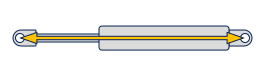 Length 265 mm
 -
 Force 300 N
Delivery across Russia. Selected region: Saint Petersburg
Parameter guide
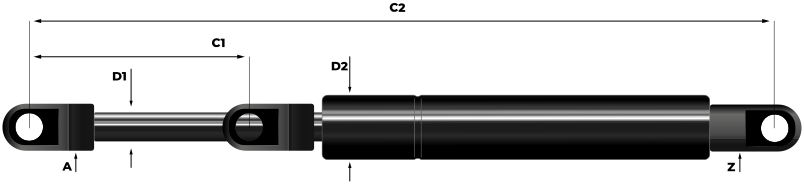
What are mounts? Rod and cylinder end fittings
Gas spring mounts are end fittings that connect the spring to the structure. Mount type affects installation, rotation angle, allowable loads and service life.
Common options:
- Ball socket — quick to install and allows free rotation.
- Threaded stud — versatile with brackets or adapters.
- Clevis — reliable pin or bolt mounting for higher loads.
- Rod end bearing — compensates misalignment and reduces rod stress.
- Eyelets and special ends — for non-standard applications.
Consider mechanism design, motion direction and operating conditions. The right mount ensures reliable long-term performance.
On this gas spring (VSTS-615-100-265-300N-2 (1A6A)) rod mount is A6 (type not specified) cylinder mount is A (type not specified).
What is rod Ø (D1)? Rod diameter
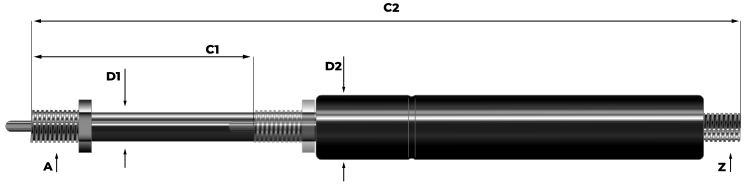
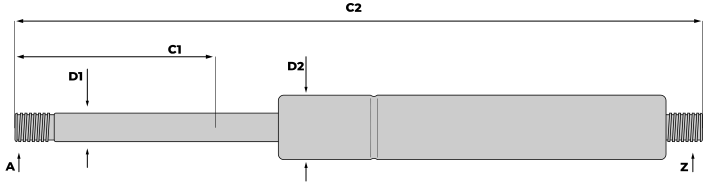
D1 is the rod diameter in millimeters. A larger diameter improves side-load capacity and buckling resistance. Match D1 when selecting an equivalent spring.
What is cylinder Ø (D2)? Cylinder diameter
D2 is the outer body (cylinder) diameter. It defines overall size and affects force at a given pressure. Specify D2 together with D1 for accurate replacement.
What is stroke (C1)? Working stroke
C1 is the working rod stroke — how many millimeters the rod extends when the spring is fully compressed. Critical for lids, hatches and moving mechanisms.
What is length (C2)? Extended length
C2 is the overall length in the fully extended state. Use it to verify the spring fits the assembly without interfering with nearby parts.
What is force (N1)? Force in newtons
N1 is the gas spring force in newtons. It determines whether the spring can hold or lift the load. Small tolerance is acceptable; a large difference changes mechanism behavior.